
Overview of Demigod (2009) and Its Core Gameplay
Demigod, released on April 14, 2009, is a fantasy strategy game developed by Gas Powered Games and published by Stardock. This title positions players as one of eight demigods vying for the vacant position of Total God after the mysterious demise of a previous god. Blending elements of real-time strategy (RTS) and role-playing game (RPG) mechanics, Demigod stands out by focusing on a singular powerful unit per player rather than traditional base-building.
Gameplay Mechanics and Game World Design
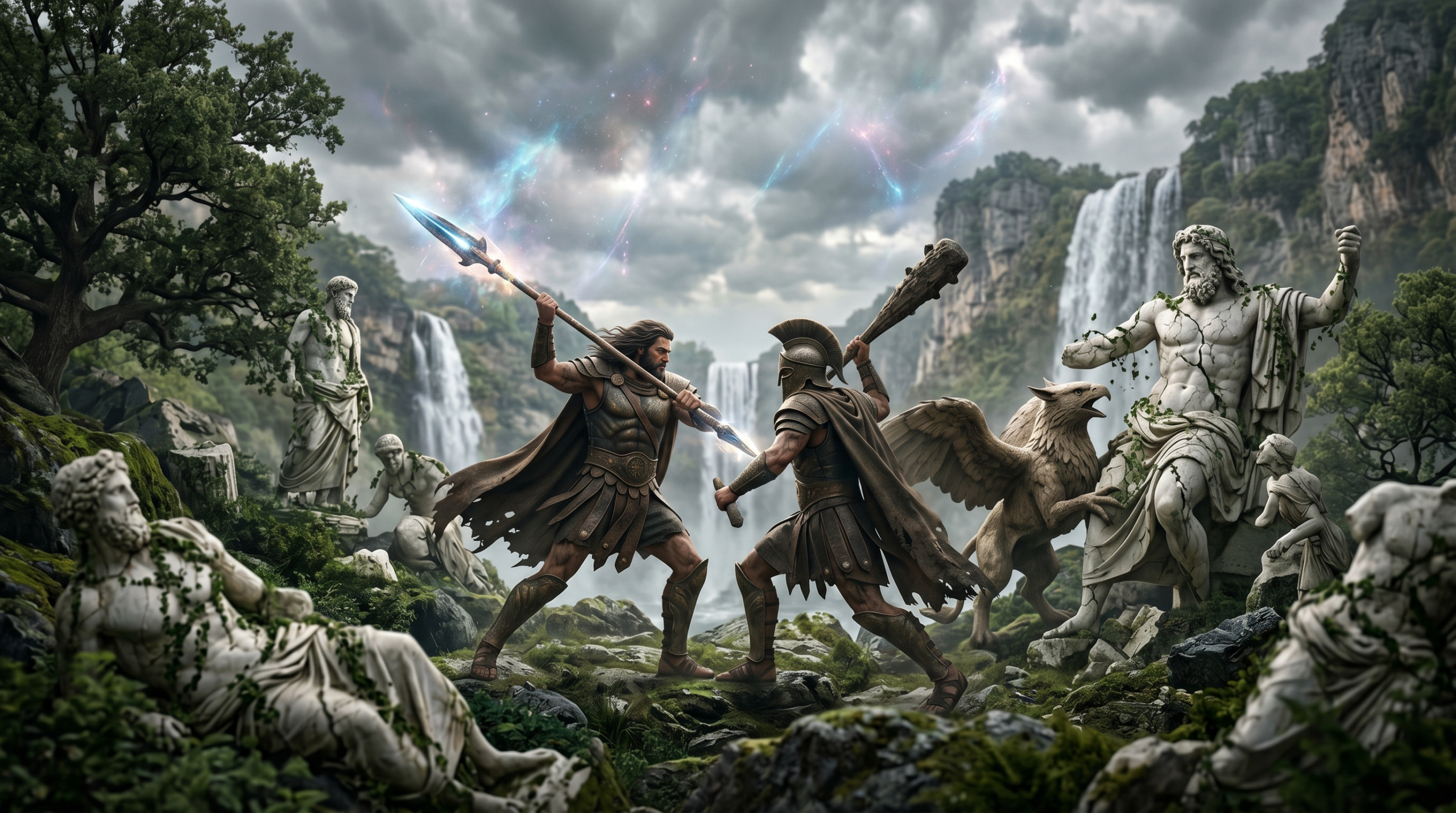
The game features skirmishes and larger tournaments where players face off against AI-controlled bots or other players. These competitive matches are set across eight symmetrical maps, notable for their intricate and thematic designs such as towering Grecian statues, expansive waterfalls, and surreal cosmic settings. The gameplay emphasizes control of one central unit—the demigod—that gains experience through combat, develops new skills, and acquires magical items and armor, effectively replacing the traditional RTS base structure.
Character Focus: The Demigods
Central to the game are the demigods themselves, each with distinct attributes and abilities. The Rook is one of the most iconic characters—a massive anthropomorphic castle-like figure capable of summoning archers, Tesla coils, and launching trebuchet attacks. Other demigods offer varying playstyles and tactical possibilities, though some require extensive playtime to fully appreciate their unique qualities. This emphasis on character customization and growth offers strategic depth uncommon in RTS titles of the era.
Historical Context and Influence
Demigod is often recognized as a foundational multiplayer online battle arena (MOBA) game that preceded more mainstream titles such as League of Legends. Its approach to combining hero-centric gameplay with real-time strategy elements was innovative for its time. Players and gaming media alike noted its imaginative world, though some critiques highlighted the game’s lack of tutorials and an overtly complex interface for newcomers. The art direction, employing a subdued “Video Game Beige” palette popular in 2009, contributed to the game’s serious tone but may not align with contemporary multiplayer aesthetics.
Technical Information and Player Requirements
The game was designed to run on modest hardware by 2009 standards, requiring a 2GHz CPU, 1GB RAM, and a 128MB 3D graphics card, alongside broadband internet for multiplayer functionality. Notably, Demigod utilized the Stardock Impulse service for integration but did not impose strict copy protection measures.
Legacy and Community Reception
At the time of its release, Demigod received attention for its inventive gameplay and strategic depth. It fostered a dedicated community and competitive player base, including notable matches played by reviewers against the game’s publisher. While its impact on the genre was significant, the game’s complexity and learning curve limited broader popular adoption compared to later MOBA titles. Nonetheless, Demigod remains a respected classic among enthusiasts of the genre.
Conclusion
Demigod (2009) presents a unique blend of fantasy strategy and role-playing elements centered on powerful demigod characters fighting for supremacy. Its artistic design, character-driven mechanics, and early contributions to the MOBA genre make it an important title in PC gaming history, despite some usability challenges for new players. Players interested in strategy games with a strong character focus may find Demigod a compelling experience worthy of exploration.