
Overview of AMD’s FSR 4.1 Update for Radeon RX 7000 Series
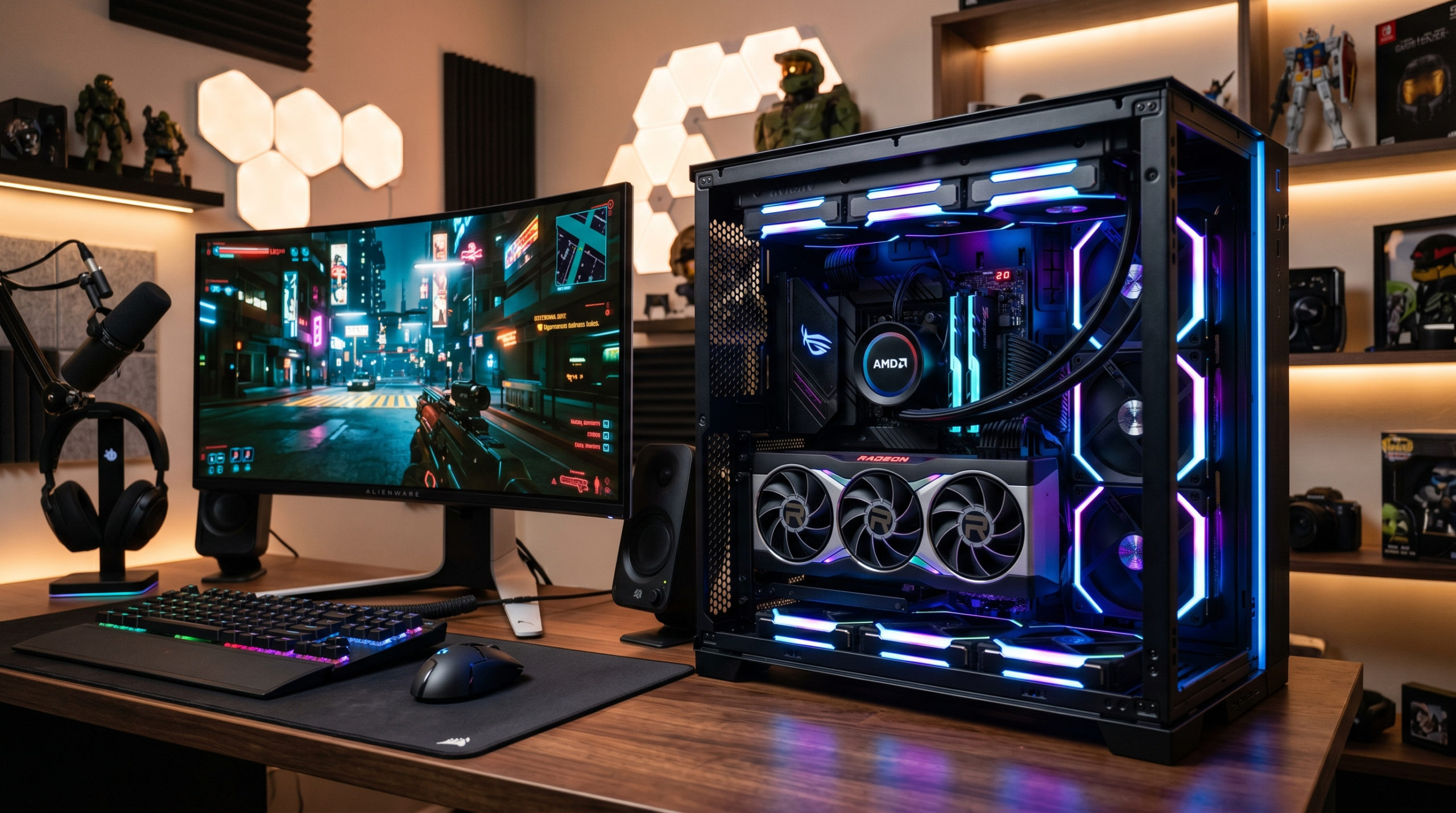
AMD has officially introduced support for FidelityFX Super Resolution (FSR) 4.1 technology to its Radeon RX 7000-series graphics cards through the latest Adrenalin 26.2.2 driver update. This upgrade aims to improve graphic rendering by enhancing AI-powered upscaling and frame generation, offering benefits particularly relevant to gamers seeking better performance without sacrificing visual fidelity.
Details on FSR 4.1 and Driver Release
The recent Adrenalin driver release focuses heavily on integrating FSR 4.1 for RDNA 3 architecture-based GPUs, marking a significant step for AMD in advancing its image enhancement technologies. Compared to the previous FSR 3, the 4.1 iteration provides superior quality in AI-driven upscaling, which is noted to approach the capabilities of Nvidia’s DLSS 4.5 framework.
The update also includes support for recent games, such as Assassin’s Creed Black Flag Resynced and Doom: The Dark Ages | Revelations, although the primary highlight remains the FSR 4.1 integration for Radeon RX 7000-series hardware.
Activation and Performance Considerations
To utilize FSR 4.1 technology, users need to enable it manually through an override in the Adrenalin settings when running games that have native FSR 3.1 support. While this adds some customization complexity, it provides a pathway for gamers to leverage the enhanced upscaling features despite some games not yet having direct FSR 4.1 integration.
Performance-wise, the FSR 4.1 implementation on RDNA 3-based cards is expected to be less powerful than on the upcoming RDNA 4 generation, primarily due to architectural differences in matrix operation capabilities. For instance, comparing models like the Radeon RX 9070 XT (RDNA 4) and RX 7800 XT (RDNA 3) suggests a trade-off either between frame rate improvements or visual quality enhancements.
Future Roadmap and Additional Notes
AMD has indicated a broader rollout plan for FSR 4.1, with support extending to older RX 6000-series cards projected for next year. This approach reflects the company’s intent to maintain relevance and performance improvements across multiple GPU generations, accommodating users who continue to use existing hardware amid market price fluctuations.
Furthermore, the Steam Machine platform is also slated to receive FSR 4.1 support, expanding the availability of AMD’s latest upscaling technologies beyond traditional PC graphics cards.
Conclusion
The introduction of FSR 4.1 on Radeon RX 7000-series GPUs through the new Adrenalin drivers represents a meaningful advancement in AMD’s graphics technology offerings. Users of RDNA 3-based cards can expect a notable performance enhancement in supported games, although those seeking top-tier results may look forward to the RDNA 4 architecture. Overall, this update demonstrates AMD’s commitment to improving gaming experiences with AI-driven graphics optimizations.